
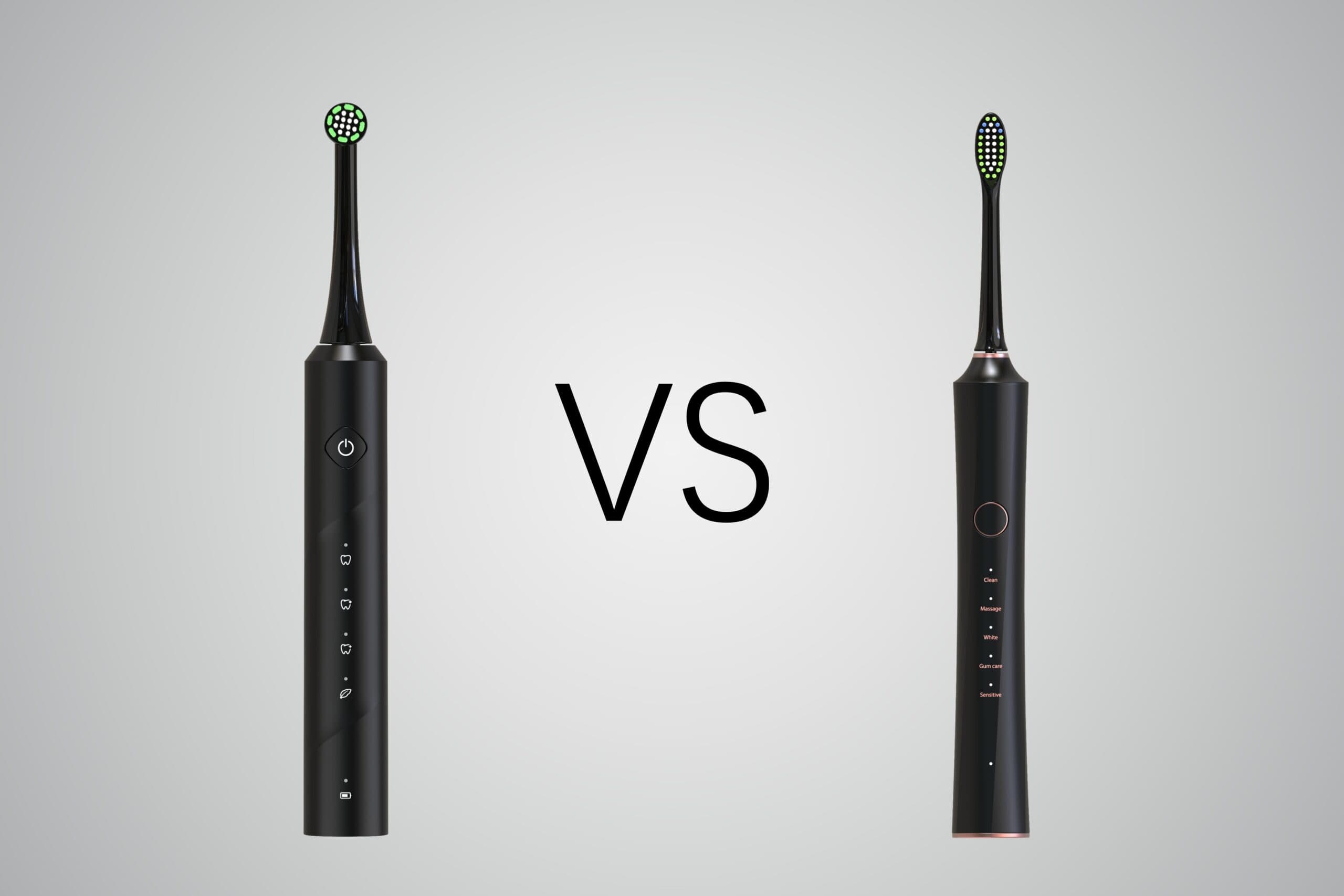
Struggling to decide between a rotating and a vibrating toothbrush for your brand? The technology seems confusing, and you need to make the right choice for your customers.
The main difference is the motion. Rotating toothbrushes use a circular, oscillating head for intense scrubbing. Vibrating (sonic) toothbrushes use high-frequency, side-to-side movements to create a fluid-dynamic cleaning action. Rotating models may remove more plaque, but sonic is often gentler.
When I’m working with a product manager like Emma, this is one of the first and most important questions we tackle. The choice between rotating and vibrating technology isn’t just a technical detail; it defines the product’s core story, its target audience, and its place in the market. Understanding this difference is the first step in building a competitive oral care product that your customers will love. Let’s break it down so you can make an informed decision for your brand.
How Do Rotating and Vibrating Toothbrushes Differ?
Choosing a core technology feels like a huge commitment. You see both types on the market and wonder which one is truly better, fearing you might pick the wrong one.
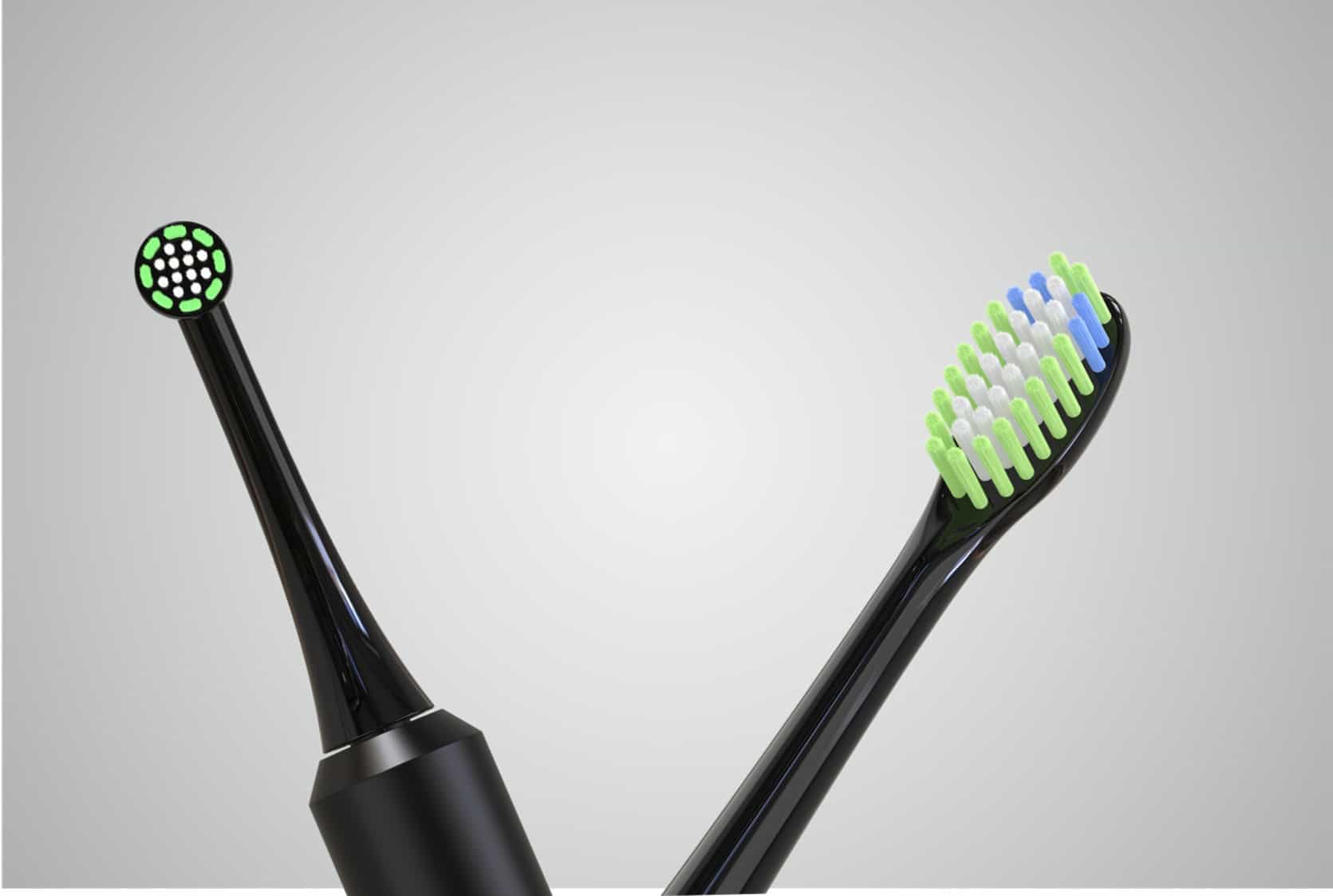
Rotating toothbrushes use a mechanical, scrubbing motion with a round head. Vibrating (sonic) toothbrushes use high-speed vibrations with a traditional-shaped head to clean with fluid dynamics, reaching between teeth. The choice depends on your cleaning philosophy: precision scrubbing versus a gentle, comprehensive clean.
I always tell my clients to think of it like this: are you building a product that is all about power and precision, or one that is about gentle effectiveness and a broader reach? There’s no single "best" answer, only the best answer for your brand’s specific goals. To make it clearer, I’ve put together a table that summarizes the key differences. This is the kind of overview I provide to help brand managers get a quick but comprehensive understanding of their options before we dive deeper into developing their unique product.
Core Technology at a Glance
| Feature | Rotating (Oscillating-Rotating) | Vibrating (Sonic) |
|---|---|---|
| Head Shape | Small, round | Traditional, elongated |
| Motion | Rotates and oscillates back-and-forth | Vibrates side-to-side at high speed |
| Speed | 1,300–8,800 strokes/minute | 24,000–62,000+ movements/minute |
| Cleaning Action | Mechanical scrubbing, polishes each tooth | High-speed vibrations create fluid waves [1][3] |
| Best For | Precise plaque removal, fighting gingivitis | Sensitive gums, wider coverage, orthodontics |
This table helps you see the trade-offs. The lower speed of a rotating brush is misleading; its power comes from direct, forceful contact. The incredibly high speed of a sonic brush creates a different kind of cleaning power that is less abrasive. [1] Understanding this fundamental difference is crucial for product development.
What Is a Rotating (Oscillating-Rotating) Toothbrush?
You’ve heard that rotating toothbrushes offer a superior clean, but you’re worried they might be too harsh for some customers. This makes you hesitate to commit to this technology.
A rotating toothbrush, also called oscillating-rotating, uses a small, round brush head that spins back and forth. [1] It often pulses as well, a combination designed to cup each tooth individually and scrub away plaque with mechanical force.
When I discuss this option with clients, I emphasize its positioning as a "dentist-clean" tool. The technology is backed by numerous clinical studies that often show a slight statistical advantage in plaque and gingivitis reduction. [1][5] This is a powerful marketing claim. The small, round head forces a more deliberate, tooth-by-tooth brushing technique, which can lead to a more thorough cleaning if done correctly. However, this aggressive action can be a drawback. For users with sensitive gums or enamel erosion, the physical scrubbing can feel too intense. [1] As a brand manager, you have to weigh the appeal of "maximum power" against the need for a comfortable user experience. It’s a classic performance vs. comfort trade-off that is central to oral care product design.
What Is a Vibrating (Sonic) Toothbrush?
You see the incredible speeds of sonic toothbrushes, like 38,000 vibrations per minute [3], but you wonder if it’s just a gimmick. How can simple vibration clean teeth effectively without scrubbing?
A vibrating, or sonic, toothbrush uses a familiar-looking brush head that vibrates from side-to-side at extremely high frequencies. This speed agitates fluids in the mouth, creating a "dynamic fluid action" that cleans between teeth and below the gumline.
I explain to my clients that the magic of sonic technology isn’t in the scrubbing; it’s in the science of fluid dynamics. The brush head moves so fast that it whips up toothpaste and water into a foam of micro-bubbles. These bubbles are propelled into areas a bristle can’t easily reach, like between teeth and along the gumline. [1] This makes it incredibly effective while feeling much gentler on the teeth and gums. This is why sonic toothbrushes are often recommended for people with sensitive gums, braces, or dental work. From a product development standpoint, this technology allows for a brand story centered on gentle, smart, and comprehensive cleaning. It feels less like a tool for scouring and more like a high-tech wellness device, which is a very appealing angle for a modern premium brand.
How Do You Use a Vibrating Toothbrush Correctly?
You’ve chosen a sonic toothbrush for your product line, but you’re concerned customers won’t know how to use it. If they scrub like a manual brush, they’ll miss the benefits.
To use a vibrating toothbrush, don’t scrub. Simply apply light pressure and glide the brush head slowly across your teeth, pausing for a few seconds on each one. Let the high-speed vibrations and the resulting fluid action do all the work for you.
Educating the user is a key part of launching a successful sonic toothbrush. I always advise brands like Emma’s to include simple, clear instructions in their packaging and marketing materials. The technique is different from what people are used to. You should start by applying toothpaste, placing the brush against your teeth at a 45-degree angle towards the gumline, and then turning it on. Move it gently from tooth to tooth, covering all surfaces—outside, inside, and chewing surfaces. Many brushes come with a 30-second timer to tell you when to switch quadrants, ensuring you brush for the full two minutes. [3] The key is to resist the urge to move the brush back and forth aggressively. By letting the sonic vibrations do their job, the user gets a superior clean without causing unnecessary wear on their gums or enamel.
Which One Should You Choose?
Now you understand the technology, but the final decision still feels big. You need to choose the right path for your brand, your customers, and your market position.
Choose a rotating toothbrush if your brand message is about powerful, deep-cleaning performance and maximum plaque removal. Choose a vibrating (sonic) toothbrush if your brand focuses on a gentle, comfortable experience, advanced technology, and suitability for sensitive users.
Ultimately, I remind my clients that both technologies are excellent and have been proven effective. The "better" choice is the one that aligns with your brand story. Do you want to be the powerful choice for users who want to feel the clean? Go with rotating. Do you want to be the smart, gentle choice for users who prioritize comfort and technology? Go with sonic. A product manager for a brand targeting people with sensitive teeth, like Emma, might lean towards sonic technology. Another manager aiming for a "professional-grade" deep clean might prefer rotating. The most critical factor, which I always stress, is user technique. A two-minute, twice-daily routine is more important than the motor inside the handle. Your job is to pick the technology that best tells your story and then educate your customers on how to get the most out of it.
Conclusion
Choose rotating for a powerful, deep-cleaning brand story. Choose vibrating (sonic) for a message focused on gentle, high-tech care. Both are effective; your brand’s positioning is the deciding factor.